
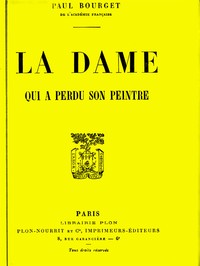
La dame qui a perdu son peintre by Paul Bourget
(5 User reviews)
994
Bourget, Paul, 1852-1935
French
"La dame qui a perdu son peintre" by Paul Bourget is a novel likely written in the early 20th century. The story centers around themes of art, authenticity, and human relationships, exploring the world of art collectors, critics, and amateur enthusiasts. The narrative is framed through the experiences of a painter and his interactions with a charmi...
the novel presents a complex interplay of emotions and relationships. The narrator, who is a painter, reflects on his feelings for a captivating woman, interspersing memories of shared moments and performances with his artistic musings. As he contemplates his decision to leave Paris without saying goodbye, he recounts instances of jealousy and desire tied to her flirtations with others, particularly with a young man named Édouard de Bonnivet. The reader is introduced to a world where the authenticity of art pieces comes into contention, drawing parallels to the narrator's own feelings of inadequacy and longing related to the enigmatic woman. As he embarks on a journey to Milan, the stage is set for further revelations about love, loss, and the elusive nature of artistic genius. (This is an automatically generated summary.)
David Ramirez
1 month agoAs someone who reads a lot, the atmosphere created by the descriptive language is totally immersive. It exceeded all my expectations.
Jessica Lewis
5 months agoTo be perfectly clear, the attention to historical detail adds a layer of realism that is rare. I couldn't put it down until the very end.
Carol Garcia
5 months agoThis download was worth it since the interplay between the protagonists drives the story forward beautifully. Simply brilliant.
Mason Moore
1 month agoI rarely write reviews but it challenges the reader's perspective in the most intellectual way. I learned so much from this.
There are no comments for this eBook.
Brian Williams
5 days agoIf you enjoy this genre, it challenges the reader's perspective in the most intellectual way. I couldn't put it down until the very end.